Osteocalcin is a protein (or hormone) produced by bone-forming cells (osteoblasts).
It is used as a marker of bone formation and also plays roles in other body systems.
Main functions
- Reflects bone formation: When osteocalcin levels are appropriate, bone formation processes function effectively.
- Bone balance: Used to monitor osteopenia and osteoporosis.
- Metabolic hormone: Helps increase insulin sensitivity and is involved in energy regulation, muscle, and fat metabolism.
- Associated with longevity.
Why test osteocalcin?
- To assess the rate of bone formation.
- To monitor the effectiveness of osteoporosis treatment.
- Interpreted together with P1NP (bone formation) and CTX or Beta-CrossLaps (bone resorption).
Who is it suitable for?
- Men and women during the menopausal/andropausal period.
- Older adults.
- People who exercise intensively or are recovering from bone injury.
- Individuals using hormones or vitamin D/calcium supplements.
How to interpret the results
- Low levels: Indicate reduced bone formation and a higher risk of bone thinning due to rapid bone turnover (may be seen in the early phase of treatment or when bone turnover is high).
- Results should be considered alongside vitamin D, PTH, calcium, and other bone markers (P1NP and Beta-CrossLaps).
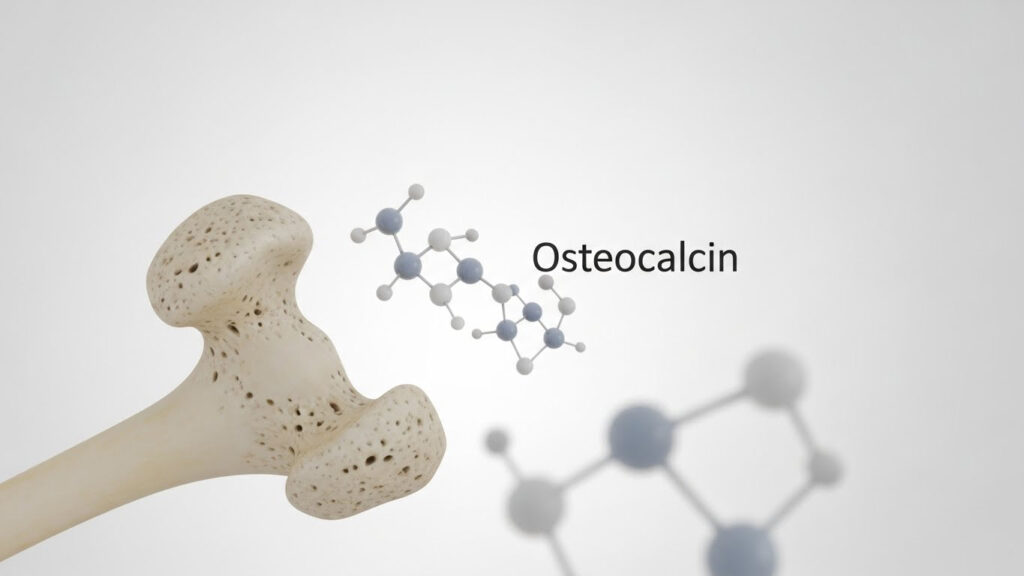
Summary
Osteocalcin is not only about bone health; it is a key link between bone, muscle, metabolism, and long-term strength and resilience.
References
- Gundberg, C. M. (1989).Osteocalcin and matrix Gla protein: Vitamin K–dependent proteins in bone.Physiological Reviews, 69(3), 990–1047.
- Lee, N. K., Sowa, H., Hinoi, E., Ferron, M., Ahn, J. D., Confavreux, C.,Karsenty, G. (2007).Endocrine regulation of energy metabolism by the skeleton. Cell, 130(3), 456–469.
- Mera, P., Laue, K., Ferron, M., Confavreux, C., Wei, J., Galán-Díez, M., … Karsenty, G. (2016).Osteocalcin signaling in myofibers is necessary and sufficient for optimum adaptation to exercise.Cell Metabolism, 23(6), 1078–1092.
- Confavreux, C. B., Szulc, P., Casey, R., Varennes, A., Goudable, J., Chapurlat, R. D., & Ferron, M. (2019).Higher serum osteocalcin is associated with improved glucose metabolism in elderly men.Osteoporosis International, 30(5), 1031–1040.
- Zhou, B., Li, H., Liu, J., Xu, L., Zang, J., Wu, S., & Sun, H. (2020).Serum osteocalcin levels are associated with insulin resistance and type 2 diabetes: A meta-analysis.Journal of Diabetes Investigation, 11(3), 597–606.