The menopausal period is a time of major hormonal change, particularly the decline in oestrogen in women and testosterone in men. These hormones play a crucial role in maintaining muscle mass, bone mass, and overall skeletal strength. When their levels fall, bone resorption exceeds bone formation, leading to a rapid reduction in bone mass and an increased risk of osteoporosis and future fractures.
In addition to measuring bone mineral density (BMD) using DXA scanning, testing bone turnover markers such as Beta CrossLaps (β-CTX) and P1NP is extremely valuable. These tests assess biochemical changes in bone metabolism, allowing osteoporosis to be identified and monitored earlier and more accurately.
What is Beta CrossLaps (β-CTX)?
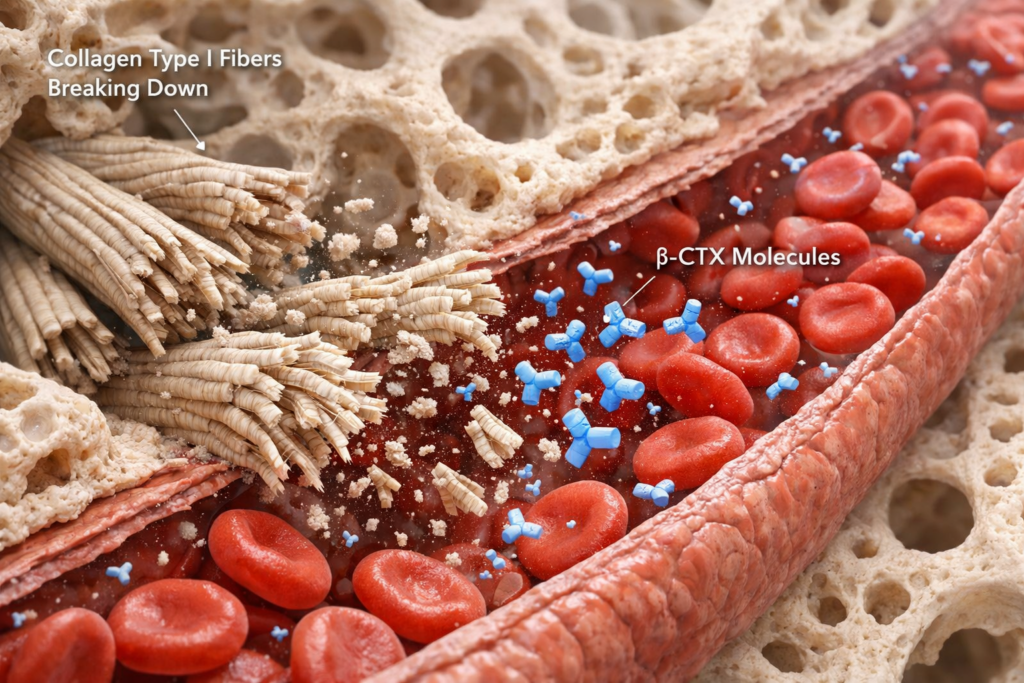
Beta CrossLaps, or C-terminal telopeptide of type I collagen (β-CTX), is a fragment released during the breakdown of type I collagen, the main structural protein in bone. It is therefore a marker of bone resorption.
- High β-CTX levels indicate increased bone breakdown.
- Elevated levels are commonly found in menopausal women, especially during the first 5–10 years after menopause.
- High β-CTX is associated with an increased fracture risk, even when BMD is not yet markedly reduced.
Used to assess:
- Osteoporosis
- Postmenopausal bone loss
- High bone turnover
- Response to anti-resorptive treatments (e.g. bisphosphonates and denosumab)
Benefits in the menopause:
- Early detection of increased bone resorption
- Assessment of the severity of bone loss
- Monitoring the response to anti-resorptive therapy
What is P1NP?
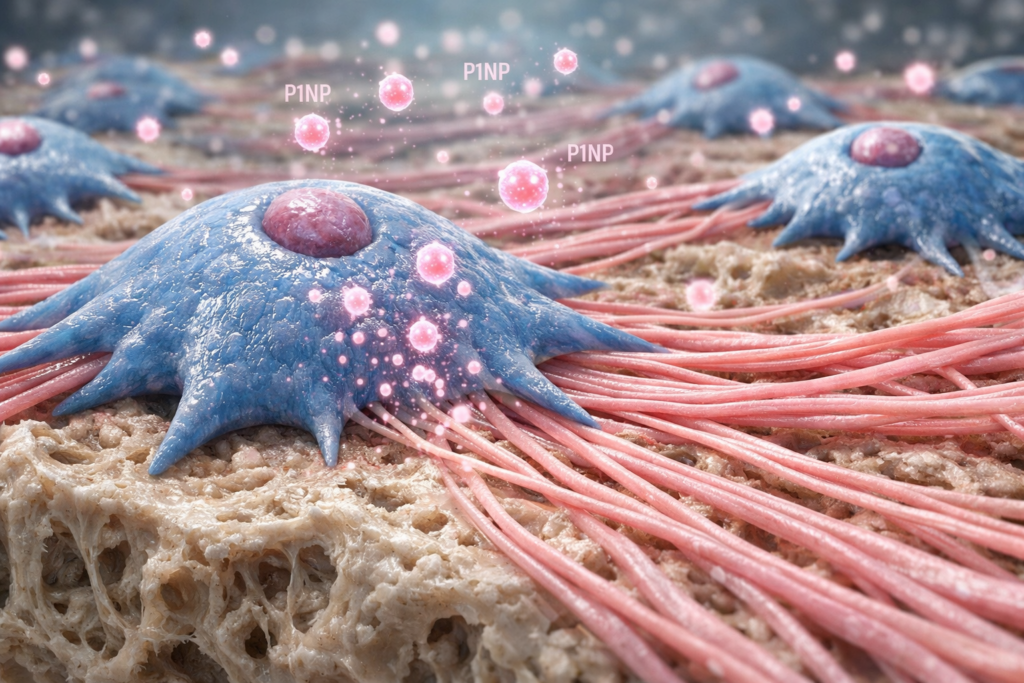
P1NP (Procollagen type I N-terminal propeptide) is released during the formation of type I collagen and is therefore a marker of bone formation.
- High P1NP levels reflect increased bone formation.
- Low P1NP levels indicate reduced bone formation, commonly seen during the menopause and in older adults.
Used to assess:
- Osteoporosis
- Bone-forming capacity
- Response to anabolic therapies
- Osteopenia in menopausal and elderly individuals
Benefits in osteoporosis:
- Evaluates the body’s capacity to build new bone
- Particularly useful for monitoring treatment with bone-forming agents such as teriparatide
- Interpreted together with β-CTX to assess the balance between bone resorption and formation
Importance of testing β-CTX and P1NP together
Measuring both markers provides a clearer picture of overall bone turnover.
| Test pattern | Interpretation |
|---|---|
| High β-CTX + Low P1NP | High bone resorption, low bone formation → high risk of osteoporosis |
| High β-CTX + High P1NP | High bone turnover → commonly seen in early menopause |
| Low β-CTX + Low P1NP | Low bone turnover → may be seen in older adults or after treatment |
This information helps to:
- Assess osteoporosis risk earlier than waiting for BMD to decline
- Select the most appropriate treatment strategy for each individual
- Monitor treatment response within 3–6 months, much faster than repeat BMD testing
Role in menopausal health programmes
In menopausal health-care programmes, β-CTX and P1NP testing plays an important role in:
- Identifying women with rapid bone loss
- Assessing the effects of hormone replacement therapy on bone health
- Planning early strategies for osteoporosis prevention
Who should consider Beta CrossLaps and P1NP testing?
- Menopausal or postmenopausal women
- Men with features of andropause, such as fatigue, reduced muscle mass, or reduced sexual performance
- Individuals with a history of fragility fractures
- Those with risk factors such as low body weight, smoking, calcium deficiency, or long-term steroid use
Summary
Beta CrossLaps (β-CTX) and P1NP are essential tools for assessing bone health in menopausal women and individuals at risk of osteoporosis. When used together, they provide a deeper understanding of the balance between bone resorption and bone formation, improving the prevention, diagnosis, and monitoring of osteoporosis and significantly reducing the long-term risk of fractures.
Laboratory testing
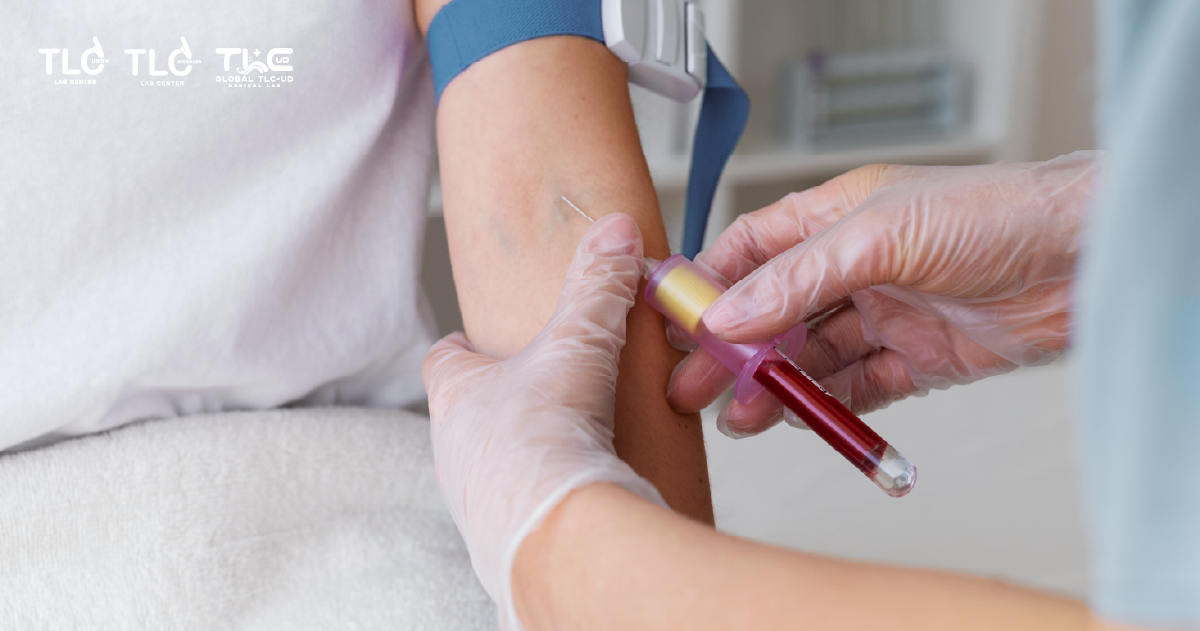
For Beta CrossLaps (β-CTX) and P1NP testing, fasting for approximately 10–12 hours is required.
Only plain water is permitted during the fasting period.