

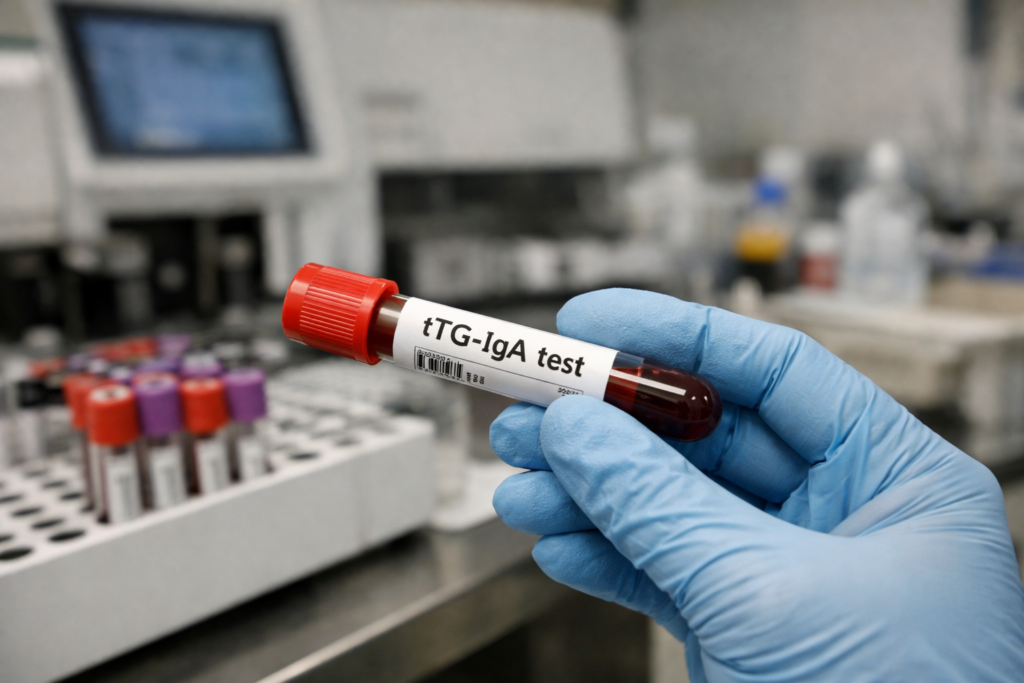
tTG-IgA (anti-tissue transglutaminase IgA) is a blood test that detects IgA antibodies produced by the body against the enzyme tissue transglutaminase (tTG). This enzyme is an important component of the lining of the small intestine.
In people with coeliac disease, when gluten is consumed, the immune system mistakenly reacts and produces tTG-IgA antibodies. This leads to inflammation and damage to the villi of the small intestine.
What is the purpose of the tTG-IgA test??
It is used as the first-line screening test to help diagnose coeliac disease (an autoimmune gluten-related condition). It is widely used because:
- High sensitivity (approximately 90–98%)
- Simple to perform and relatively inexpensive
What does tTG-IgA detect directly?
It shows that the body is producing antibodies that attack its own tTG enzyme, which is the central autoimmune mechanism in coeliac disease.
Interpretation of results
- tTG-IgA Positive: Indicates a high likelihood of coeliac disease
- EMA-IgA testing is recommended for confirmation
- In some cases, a small-intestinal biopsy may be considered
- tTG-IgA Negative: Suggests a low likelihood of coeliac disease
Exceptions:- The patient has already stopped eating gluten before the test
- The patient has IgA deficiency
Important precautions
The patient must still be consuming gluten before testing.
(A gluten-free diet prior to testing may result in a false-negative result.)
Common diagnostic sequence
- tTG-IgA → screening test
- EMA-IgA → confirmatory test
- (In some cases) Intestinal biopsy → definitive confirmation
Summary
tTG-IgA is a crucial starting point for early diagnosis of coeliac disease, helping to prevent long-term complications affecting gut and bone health.