In today’s rapidly changing world—driven by technological progress and the fast-moving digital marketplace—many businesses and professions must adapt quickly. These changes have affected people’s lifestyles in different ways, particularly sleep and waking patterns and eating habits, which in turn have increased disruption of the body’s biological clock and produced a rise in various health problems.
The circadian clock
is the body’s internal timing system that coordinates physiological processes such as waking, sleeping, hormone secretion, metabolism, behaviour and immune function. When we live out of step with our circadian rhythms, bodily systems become dysregulated, which can lead to disorders—most notably obesity and diabetes.
Where the Biological Clock Is Located
There are two principal sites:
- Central brain clock — located in the suprachiasmatic nucleus (SCN) of the hypothalamus.
- Peripheral clocks — distributed throughout organs such as muscle, adipose tissue, liver, pancreas and the gastrointestinal tract; these receive timing cues from the central clock via neural and hormonal signals.
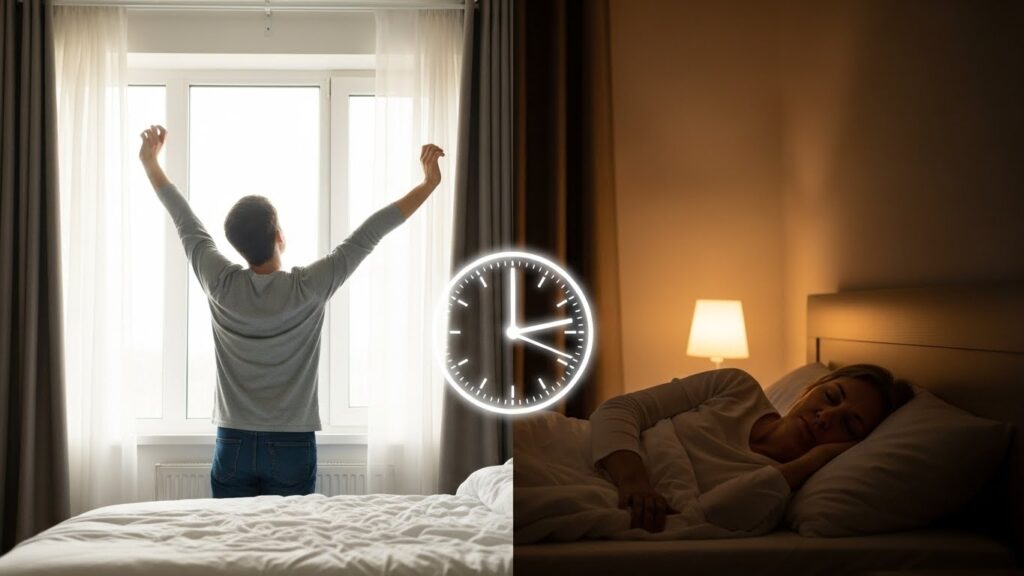
The single most important cue for synchronising the circadian clock is light. Light perceived by the retina is transmitted to the SCN, which then sends timing signals to peripheral clocks in tissues throughout the body.
What Causes Circadian Rhythm Disruption?
- Ageing. With advancing age the circadian system often becomes less accurate owing to degeneration in the hypothalamus, reduced circulating melatonin and diminished light sensitivity. Older adults—particularly those with cognitive decline or those living in institutions—commonly experience irregular sleep timing.
- Shift work. Occupations requiring activity during conventional sleep hours disrupt normal timing.
- “New Normal” lifestyles. Working from home, excessive evening screen use (blue light from phones, computers and tablets), frequent late meals and staying up late to binge TV or series all disturb circadian timing.
How the Circadian Clock Works
1. Central control by the brain. The hypothalamus acts as the master regulator, sending signals to organs across the body.
2. Light responsiveness. Daylight suppresses melatonin production and promotes alertness; at night melatonin secretion increases and supports sleep.
3. Downstream effects. The circadian clock influences many physiological systems, for example:
- Sleep: orchestrates a regular sleep–wake cycle.
- Hormone secretion: times release of hormones such as growth hormone, which aids repair at night.
- Body temperature: follows a predictable 24-hour rhythm.
Key Functions
- Regulates hormone secretion (melatonin for sleep; cortisol for stress).
- Controls the sleep–wake cycle.
- Regulates core body temperature.
- Affects metabolism, energy balance and blood-glucose regulation.
- Influences mood, attention and performance.
- Coordinates cellular rhythms such as repair processes and inflammatory responses.
Importance and Consequences
- Health benefits: A well-synchronised circadian clock supports efficient bodily function, reduces disease risk and promotes long-term health.
- Consequences of disruption: Shifted schedules, travel across time zones, sleep deprivation and irregular routines can disturb circadian timing and harm sleep quality and overall health.
How to Reset Your Biological Clock for Better Health
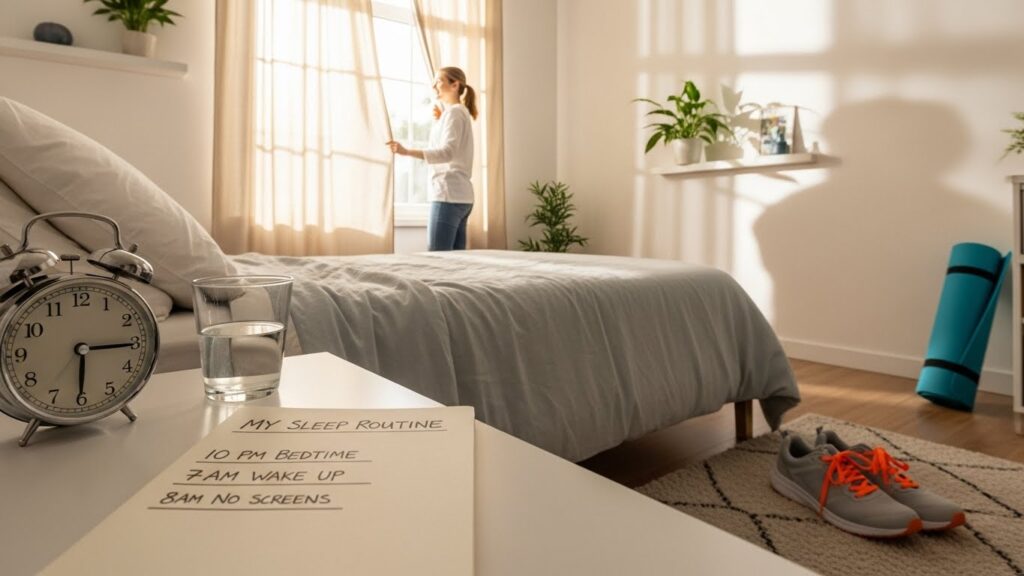
- Regular sleep schedule: Go to bed and wake at consistent times (aim to sleep before 22:00) and get 7–8 hours per night. Night-shift workers should try to keep at least three nights per week on a regular sleep pattern if possible. Those with snoring or suspected sleep apnoea should consult a specialist, as these conditions markedly reduce sleep quality.
- Meal timing: Eat regular meals and avoid late-night eating (try not to eat after 20:00), since frequent late eating raises long-term obesity risk.
- Exercise timing: Prefer daytime exercise rather than late-night workouts, which may impair sleep for some people. Allow at least one hour between light exercise and a meal; for heavy meals leave 2–3 hours before exercise to let digestion and metabolic enzymes return to baseline. Aim for 15–30 minutes of activity per day (or 150 minutes per week); sessions of 30 minutes or more are more effective for fat burning. Home exercise is a good alternative when outdoor options are limited.
- Light exposure: Seek daylight during the day—especially morning light—and avoid remaining in dim indoor conditions. In the evening, reduce exposure to bright lights and screens (phones, tablets, TVs) before bedtime.
Summary
The circadian clock is the body’s biological timekeeper that determines when we should sleep, wake, eat, work and rest to align with natural daily rhythms.
References
- Roenneberg, T., & Merrow, M. (2005). Circadian clocks—The fight for time. Nature Reviews Molecular Cell Biology, 6(12), 965–974.
- Bass, J., & Lazar, M. A. (2016). Circadian time signatures of fitness and disease. Science, 354(6315), 994–999.
- Panda, S. (2016). Circadian physiology of metabolism. Science, 354(6315), 1008–1015.
- Czeisler, C. A., & Gooley, J. J. (2007). Sleep and circadian rhythms in humans. Cold Spring Harbor Symposia on Quantitative Biology, 72, 579–597.
- Partch, C. L., Green, C. B., & Takahashi, J. S. (2014). Molecular architecture of the mammalian circadian clock. Trends in Cell Biology, 24(2), 90–99.
- Guo, H., Brewer, J. M., Lehman, M. N., & Ben-David, Y. (2021). The circadian clock and cancer: Links between circadian disruption and tumorigenesis. Frontiers in Biology, 16, 1–14.