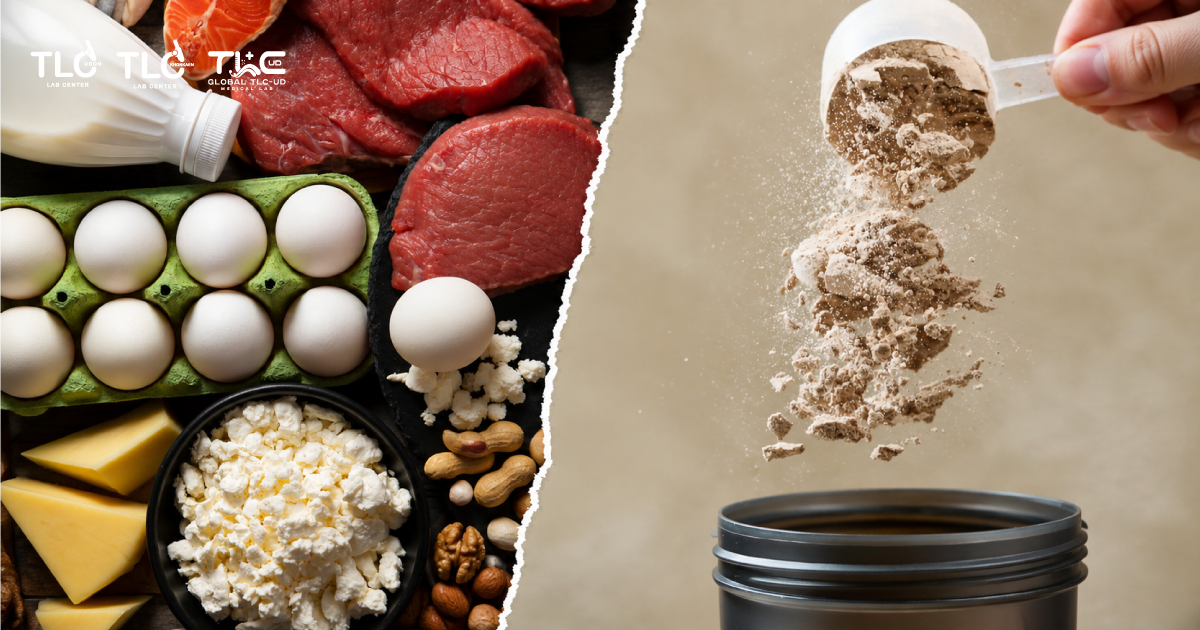

Building muscle effectively does not depend solely on protein intake or exercise. It also involves hormonal balance, as well as the vitamins and minerals essential for muscle function, recovery and the long-term maintenance of muscle mass.
5 Hormones Involved in Muscle Building
Several hormones play a role in building and maintaining muscle mass, including protein synthesis, post-exercise recovery and reducing muscle breakdown.
1. Total Testosterone and Free Testosterone
These are key hormones that help stimulate protein synthesis, which is important for muscle growth and repair. They help the body to:
- Build and repair muscle more effectively
- Increase strength
- Increase muscle mass
- Reduce muscle breakdown
If Total Testosterone or Free Testosterone levels are below the normal range, it may become more difficult to build muscle, and this may be associated with fatigue and slower recovery after exercise.
2. SHBG (Sex Hormone-Binding Globulin)
SHBG is a protein that binds to sex hormones, particularly Testosterone. If SHBG levels are too high, the amount of Free Testosterone, which is the biologically active form, may decrease. This can reduce the body’s ability to build muscle, even when Total Testosterone levels remain within the normal range.
3. DHEA-S
DHEA-S is a precursor hormone for Testosterone and Estrogen and plays a role in maintaining muscle mass and supporting recovery. It contributes to:
- Maintaining muscle mass
- Increasing strength
- Supporting energy levels
- Promoting recovery after exercise
Decreased DHEA-S levels are associated with the loss of muscle mass that can occur with ageing.
4. IGF-1 (Insulin-like Growth Factor-1)
IGF-1 is a hormone influenced by Growth Hormone and plays an important role in muscle growth and repair. It helps to:
- Stimulate muscle cell growth
- Increase protein synthesis
- Reduce muscle breakdown
- Support effective muscle repair after exercise
5. Cortisol
Cortisol is a hormone released when the body experiences stress or strenuous exercise. At appropriate levels, Cortisol helps the body adapt to stress. However, chronically elevated Cortisol may affect muscle growth and recovery by:
- Increasing the breakdown of muscle protein
- Reducing muscle building
- Slowing recovery
- Increasing abdominal fat accumulation
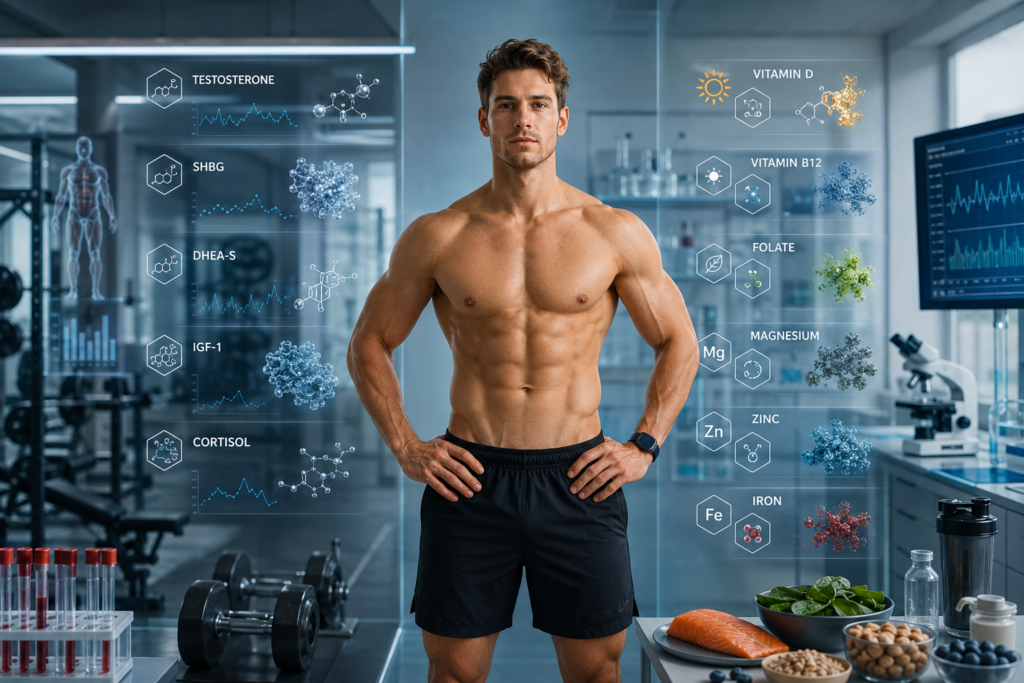
Vitamins and Minerals Essential for Muscle Building
In addition to hormones, vitamins and minerals play important roles in muscle function, energy production, oxygen transport and the body’s recovery processes following exercise.
1. Vitamin D
Vitamin D plays an important role in muscle function. It helps to:
- Enable muscle cells to function effectively
- Increase muscle contraction strength
- Support Testosterone function
- Help reduce the risk of injury
Vitamin D deficiency may be associated with muscle weakness and reduced muscle-building capacity.
2. Vitamin B12
Vitamin B12 plays a role in red blood cell production, nervous system function and the transport of oxygen to the muscles. It helps to:
- Produce red blood cells and support nervous system function
- Transport oxygen to the muscles
- Support energy levels during exercise
- Enable muscles to function effectively
3. Folate (Vitamin B9)
Folate is important for cell production and repair. It plays a role in:
- DNA synthesis and cell division, which are essential for the repair and formation of new muscle tissue
- Working together with Vitamin B12 to produce red blood cells
4. Magnesium
Magnesium is a mineral involved in more than 300 biochemical reactions in the body and plays an important role in muscle function and energy production. It helps to:
- Produce energy (ATP)
- Regulate muscle contraction and relaxation
- Support protein synthesis
- Help reduce muscle cramps or muscle fatigue
5. Zinc
Zinc is an important mineral for the growth and repair of the body. It plays a role in:
- Protein synthesis
- Cell division
- Wound healing
- Testosterone function
Zinc deficiency may reduce the body’s ability to build muscle, recover effectively and maintain normal immune function.
6. Iron
Iron studies (Serum Iron, Ferritin, TIBC and % Transferrin Saturation) are important because iron is a key component of haemoglobin, which transports oxygen to the muscles.
When the muscles receive sufficient oxygen, the body can produce energy more effectively, helping to support longer exercise sessions and faster recovery.
Iron deficiency may cause fatigue and tiredness and can reduce exercise performance and the body’s ability to build muscle.
Summary
Effective muscle building does not depend solely on protein intake or weight training. It also requires balanced hormone levels, adequate vitamins and minerals, and appropriate rest and recovery.
When these factors work together in balance, the body can build muscle mass, increase strength and maintain muscle effectively over the long term.