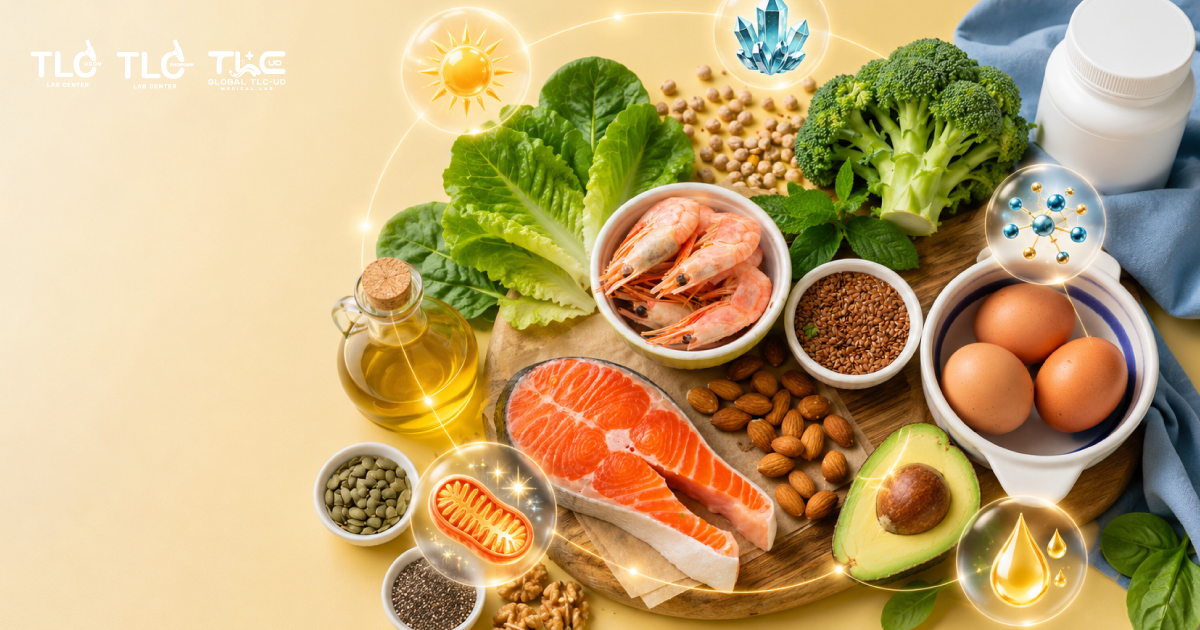
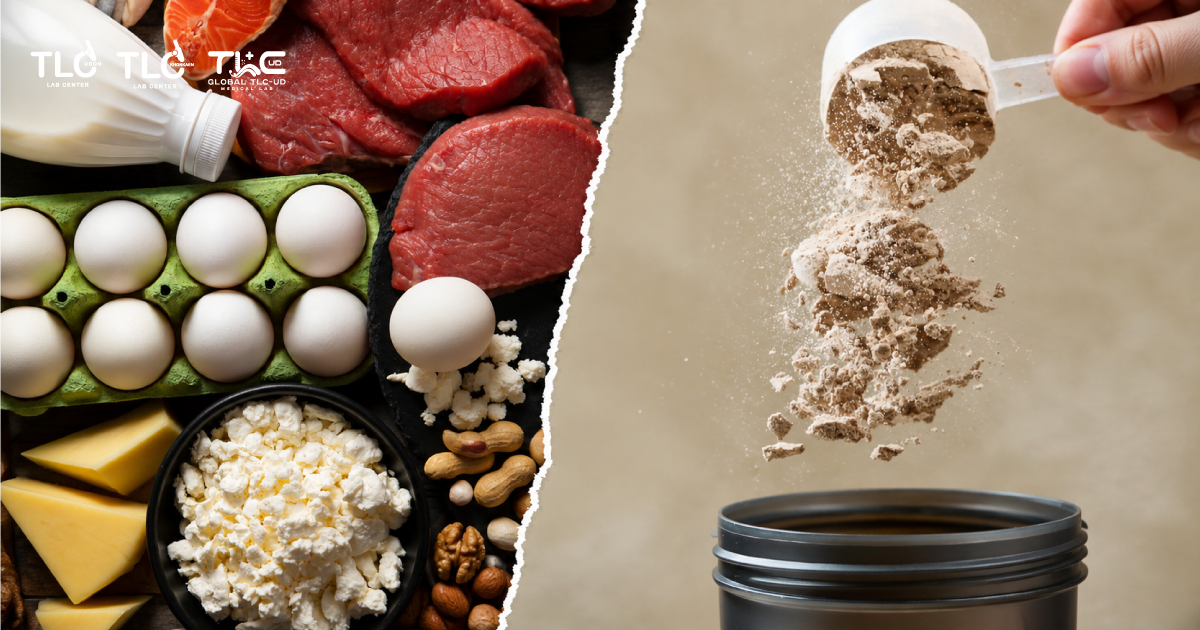
If your goal is muscle hypertrophy (muscle growth), choosing the right protein involves more than simply looking at the total amount of protein. You should also consider the quality of the protein, its essential amino acid (EAA) content, and particularly its leucine content, as leucine is the key amino acid responsible for stimulating muscle protein synthesis (MPS).
Recommended Protein Sources for Building Muscle
1. Whey Protein (The Preferred Choice)
Whey protein is a high-quality protein extracted from whey, the liquid that remains during cheese production. Whey accounts for approximately 20% of the protein in cow’s milk, while the remaining 80% is casein.
Whey protein is widely recognised as one of the highest-quality protein sources because it is a complete protein, containing all nine essential amino acids. It is also naturally rich in branched-chain amino acids (BCAAs), particularly leucine, which plays a crucial role in stimulating muscle protein synthesis.
Benefits of Whey Protein
- Helps increase and maintain muscle mass
- Promotes muscle recovery following exercise
- Rapidly absorbed, making it ideal after workouts
- Increases satiety and may assist with weight management
- Supports immune function through bioactive compounds such as lactoferrin and immunoglobulins
Types of Whey Protein
- Whey Protein Concentrate (WPC)
- Approximately 70–80% protein
- Contains small amounts of fat and lactose
- Generally the most economical option
- Whey Protein Isolate (WPI)
- Approximately 90% protein or higher
- Very low in fat and lactose
- Suitable for people with lactose intolerance
- Whey Protein Hydrolysate (WPH)
- Partially hydrolysed (pre-digested) for faster absorption
- Commonly used in clinical nutrition and sports nutrition products
- More expensive than other forms of whey
Who Should Consider Whey Protein?
- Individuals aiming to increase muscle mass
- Those undertaking resistance training or competitive sports
- Older adults wishing to preserve muscle mass and strength
- Anyone unable to meet their protein requirements through food alone
Advantages
- Rapid absorption
- Complete essential amino acid profile
- High leucine content (approximately 5–3 g per 25–30 g serving)
- Highly effective at stimulating muscle protein synthesis, particularly after exercise
Best taken: Immediately after resistance training.
2. Soy Protein
Soy protein is extracted from soybeans and is considered a high-quality complete plant protein, providing all nine essential amino acids. It also contains the three BCAAs—leucine, isoleucine and valine—which contribute to muscle growth and recovery.
Benefits of Soy Protein
- Supports muscle growth and repair
- Suitable for vegetarians and vegans
- Helps promote fullness and may assist weight management
- May improve heart health by lowering LDL cholesterol when consumed as part of a healthy diet
- Naturally low in saturated fat and cholesterol-free
- Contains naturally occurring isoflavones, plant compounds with mild oestrogen-like activity that may benefit bone health and help relieve menopausal symptoms in some women
Advantages
- Complete plant protein
- Cholesterol-free
- Suitable for individuals with dairy allergies or lactose intolerance
- Effective for maintaining muscle mass
Limitations
- Contains slightly less leucine than whey protein
Who Should Consider Soy Protein?
- Individuals aiming to build muscle
- Regular exercisers
- Those with dairy protein allergy or lactose intolerance
- Vegetarians and vegans
Precautions
- Individuals with a soy allergy should avoid soy protein.
- People with thyroid disease can usually consume soy in normal dietary amounts but should take thyroid hormone medication at least 3–4 hours apart from soy products.
3. Pea Protein
Pea protein is derived from yellow peas and is usually available as pea protein isolate, containing approximately 80–90% protein by weight.
Benefits of Pea Protein
- Helps build and maintain muscle mass, particularly when combined with resistance training
- Provides nearly all essential amino acids and contains BCAAs that support muscle recovery
- Easily digested and unlikely to cause dairy-related digestive problems
- Naturally lactose-free, making it suitable for vegetarians, vegans and individuals with dairy intolerance
- Promotes satiety and may assist with weight management
- Provides a useful source of iron while remaining low in saturated fat
Advantages
- Well absorbed
- Easy to digest
- Cholesterol-free
- Lactose-free
- Suitable for plant-based diets
To achieve an optimal leucine intake, a slightly larger serving than whey protein is generally required.
Limitations
- Relatively low in methionine, so it is beneficial to combine it with methionine-rich foods such as whole grains.
- May stimulate muscle protein synthesis slightly less effectively than whey because of its lower leucine content.
Who Should Consider Pea Protein?
- Individuals aiming to build muscle
- Those allergic to cow’s milk or whey protein
- Vegetarians and vegans
- Anyone needing to increase daily protein intake
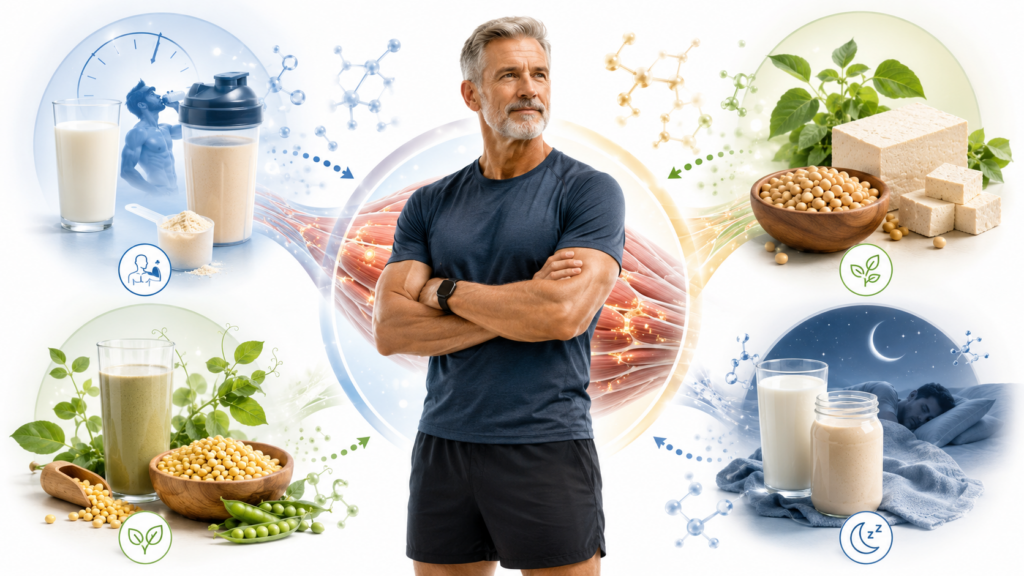
For adults aged 61 years and over who regularly perform aerobic exercise, cardio and resistance training, pea protein is an excellent option. Choose a product providing 20–30 g of protein per serving and 2.5–3 g of leucine per meal, or a formulation that combines several plant protein sources to maximise muscle protein synthesis.
4. Casein Protein
Casein is the primary protein found in cow’s milk, accounting for approximately 80% of its total protein content.
Unlike whey, casein is slowly digested and absorbed, providing a gradual release of amino acids over approximately 5–7 hours. For this reason, it is often referred to as a slow-digesting protein.
Benefits of Casein Protein
- Helps preserve and increase muscle mass
- Reduces muscle protein breakdown during prolonged periods without food, including overnight
- Promotes fullness, which may aid weight management
- Provides all essential amino acids, including BCAAs and leucine
Advantages
- Slow digestion and sustained amino acid release
- Ideal before bedtime to support overnight muscle recovery
- Particularly effective at reducing muscle breakdown
Limitations
- Not suitable for people with a cow’s milk protein allergy
- Suitability for those with lactose intolerance depends on the specific product, as lactose content varies considerably
Who Should Consider Casein Protein?
- Individuals wishing to maintain or increase muscle mass
- Those with long intervals between meals
- People seeking overnight muscle recovery
For adults aged 61 years who perform aerobic exercise, cardio and resistance training:
- After exercise: Whey protein is generally the preferred option due to its rapid absorption and higher leucine content.
- Before bedtime: Casein protein is an excellent choice because it provides a sustained release of amino acids throughout the night, helping reduce muscle breakdown and enhance recovery.
Summary
Goal | Best Choice |
Maximum muscle growth | Whey protein |
Dairy-free or plant-based diet | Soy protein or pea protein |
Overnight muscle recovery | Casein protein |
Regardless of the protein source you choose, muscle growth is optimised by combining adequate daily protein intake, regular progressive resistance training, sufficient total energy intake, and adequate sleep and recovery. Together, these factors provide the best environment for building stronger, healthier muscles.
References
- American Heart Association. (2021). Soy Protein and Cardiovascular Health.
- Babault, N., Païzis, C., Deley, G., et al. (2015). Pea proteins oral supplementation promotes muscle thickness gains during resistance training: A double-blind, randomised, placebo-controlled clinical trial. Journal of the International Society of Sports Nutrition, 12, 3.
- Boirie, Y., Dangin, M., Gachon, P., et al. (1997). Slow and fast dietary proteins differently modulate postprandial protein accretion. Proceedings of the National Academy of Sciences, 94(26), 14930–14935.
- Food and Agriculture Organization of the United Nations. (2013). Dietary Protein Quality Evaluation in Human Nutrition. FAO Food and Nutrition Paper No. 92.
- International Society of Sports Nutrition. (2018). Position Stand: Protein and Exercise. Journal of the International Society of Sports Nutrition, 15(1), 20.
- Jäger, R., Kerksick, C. M., Campbell, B. I., et al. (2017). International Society of Sports Nutrition Position Stand: Protein and Exercise. Journal of the International Society of Sports Nutrition, 14, 20.
- Messina, M. (2016). Soy and Health Update: Evaluation of the Clinical and Epidemiologic Literature. Nutrients, 8(12), 754.
- Morton, R. W., Murphy, K. T., McKellar, S. R., et al. (2018). A systematic review, meta-analysis and meta-regression of the effect of protein supplementation on resistance training-induced gains in muscle mass and strength in healthy adults. British Journal of Sports Medicine, 52(6), 376–384.
- Phillips, S. M., & van Loon, L. J. C. (2011). Dietary Protein for Athletes: From Requirements to Optimum Adaptation. Journal of Sports Sciences, 29(Suppl. 1), S29–S38.