การสร้างกล้ามเนื้อให้ แข็งแรง มีมวลกล้ามเนื้อที่ดี และฟื้นตัวได้ดี ไม่ได้ขึ้นอยู่กับการเพิ่มปริมาณโปรตีนเพียงอย่างเดียว แต่เกิดจากหลายปัจจัยที่ทำงานร่วมกัน โดยหลัก ๆ คือ
1. การฝึกกล้ามเนื้อ (Resistance Training)
ต้องมีแรงกระตุ้นให้กล้ามเนื้อปรับตัว เช่น
- Weight training
- Squat, Lunge
- Push-up
- Leg press หรือยางยืด
และควรเพิ่มความหนักอย่างค่อยเป็นค่อยไป (Progressive overload)
2. โปรตีนและกรดอะมิโนที่เพียงพอ
โปรตีนเป็นวัตถุดิบสำหรับการซ่อมแซมและสร้างกล้ามเนื้อ โดยเฉพาะกรดอะมิโนจำเป็นและ Leucine แหล่งโปรตีน เช่น
- ไข่
- ปลา
- เนื้อไม่ติดมัน
- นม ถั่ว เต้าหู้
- Whey หรือ Soy protein
3. พลังงานและสารอาหารที่เพียงพอ
หากรับประทานพลังงานน้อยเกินไป ร่างกายจะสร้างกล้ามเนื้อได้ยาก นอกจากนี้ยังต้องมีคาร์โบไฮเดรตและไขมันดีในปริมาณเหมาะสม เพื่อสนับสนุนการออกกำลังกายและระบบฮอร์โมน
4. วิตามินและแร่ธาตุ โดยเฉพาะ
- Vitamin D
- Vitamin B12
- Folate (Vitamin B9)
- Magnesium
- Zinc
- Iron ซึ่งเกี่ยวข้องกับการทำงานของกล้ามเนื้อ การสร้างพลังงาน การนำออกซิเจน และการฟื้นตัว
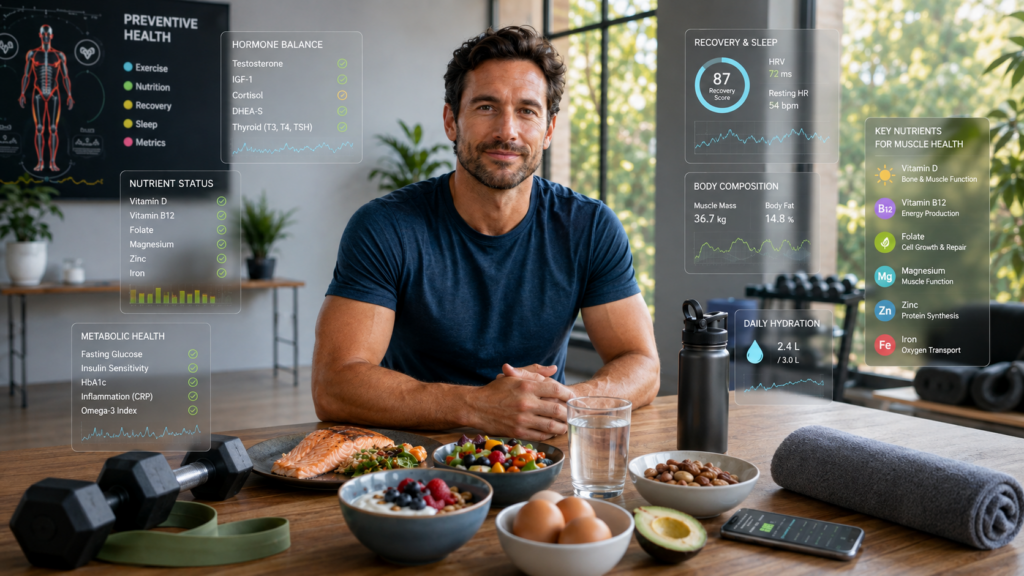
5. สมดุลของฮอร์โมน ซึ่งฮอร์โมนสำคัญ ได้แก่
- Testosterone
- IGF-1
- Growth Hormone
- DHEA-S
- Cortisol
- Thyroid hormones(FT3,FT4,TSH)
หากฮอร์โมนที่เกี่ยวข้องกับการสร้างและสลายกล้ามเนื้อเสียสมดุล อาจทำให้เพิ่มกล้ามเนื้อได้ยาก
6. การนอนหลับและการฟื้นตัว
การนอนหลับดีและหลับลึกซึ่งถือว่าเป็นช่วงสำคัญที่ร่างกายจะซ่อมแซมกล้ามเนื้อ เเละควรนอนประมาณ 7–9 ชั่วโมง/คืน และไม่ฝึกหนักกล้ามเนื้อกลุ่มเดิมติดต่อกันโดยไม่มีเวลาฟื้นตัว
7. สุขภาพและการเผาผลาญโดยรวม
ระดับน้ำตาลและอินซูลิน การทำงานของไทรอยด์ ตับ ไต ภาวะอักเสบ รวมถึงสุขภาพลำไส้ ล้วนมีผลต่อการใช้สารอาหารและการสร้างกล้ามเนื้อ
สรุป
กล้ามเนื้อที่เเข็งเเรง (Strong Muscle) เท่ากับ Training + Protein + Nutrition + Hormonal Balance + Recovery + Good Metabolic Health
ในแนวทาง Biomarker-Based Muscle Building สามารถประเมินได้จาก
- CBC
- Blood sugar
- HbA1c
- Kidney function
- Liver function
- Total Protein/Albumin (Ratio)
- Vitamin D
- Vitamin B12
- Folate (Vitamin B9)
- Iron study
- Magnesium
- Zinc
- FreeTestosterone (SHBG)
- DHEA-S
- IGF-1
- Cortisol
- Thyroid profile (FT3, FT4, TSH)
เอกสารอ้างอิง
- American College of Sports Medicine. (2009). Progression models in resistance training for healthy adults. Medicine & Science in Sports & Exercise, 41(3), 687–708.
- Ceglia, L. (2008). Vitamin D and skeletal muscle tissue and function. Molecular Aspects of Medicine, 29(6), 407–414.
- Cruz-Jentoft, A. J., Bahat, G., Bauer, J., Boirie, Y., Bruyère, O., Cederholm, T., Cooper, C., Landi, F., Rolland, Y., Sayer, A. A., Schneider, S. M., Sieber, C. C., Topinkova, E., Vandewoude, M., Visser, M., & Zamboni, M. (2019). Sarcopenia: Revised European consensus on definition and diagnosis. Age and Ageing, 48(1), 16–31.
- Dattilo, M., Antunes, H. K. M., Medeiros, A., Mônico Neto, M., Souza, H. S., Tufik, S., & de Mello, M. T. (2011). Sleep and muscle recovery: Endocrinological and molecular basis for a new and promising hypothesis. Medical Hypotheses, 77(2), 220–222.
- Kraemer, W. J., & Ratamess, N. A. (2005). Hormonal responses and adaptations to resistance exercise and training. Sports Medicine, 35(4), 339–361.
- Morton, R. W., Murphy, K. T., McKellar, S. R., Schoenfeld, B. J., Henselmans, M., Helms, E., Aragon, A. A., Devries, M. C., Banfield, L., Krieger, J. W., & Phillips, S. M. (2018). A systematic review, meta-analysis and meta-regression of the effect of protein supplementation on resistance training-induced gains in muscle mass and strength in healthy adults. British Journal of Sports Medicine, 52(6), 376–384.
- Phillips, S. M., & Van Loon, L. J. C. (2011). Dietary protein for athletes: From requirements to optimum adaptation. Journal of Sports Sciences, 29(Suppl. 1), S29–S38.
- Wolfe, R. R. (2017). Branched-chain amino acids and muscle protein synthesis in humans: Myth or reality? Journal of the International Society of Sports Nutrition, 14, Article 30.